
Hopi coiled baskets are made only in the villages of Second Mesa. The most common type of coiled basket is the plaque. These flat baskets, typically featuring Kachina or animal images woven into them, are used to express gratitude. If someone does you a favor, you thank them with a basket. If they help put together a wedding ensemble, they might be thanked with multiple baskets. If a young person is seen doing an act of kindness, they will likely be gifted a basket.
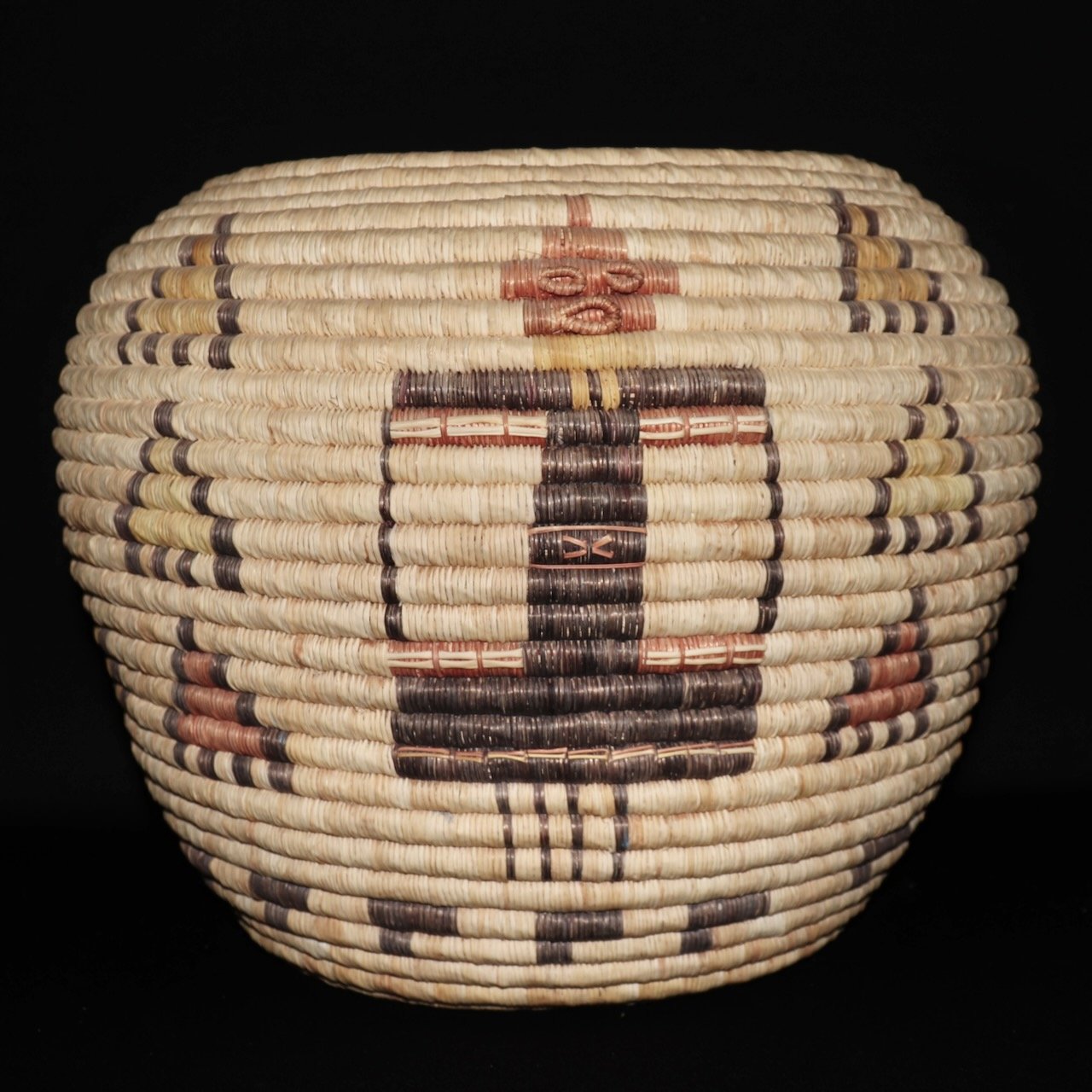
Coiled baskets are also woven in larger container shapes, and although they are not as common, they are an outstanding example of traditional Hopi culture. Any coiled basket takes a year to gather, prepare, and weave. This is because the Galleta grass, which forms the foundation of the baskets, can only be gathered in the spring and early summer. This grass is bundled and wrapped in the inner strips of yucca harvested at different times of year because they will turn different shades of yellow when they dry. The plants used to dye the yucca are also gathered at various times of the year, depending on your desired colors.

During the year, the plants used in the basket are laid out and dried. It's like a production line where different components from different areas and time periods are constantly being gathered to be used when the weaver wants to create a basket. Yucca leaves are dyed to create images of Katsinas or animals on the basket.
We recently discovered a collection of these container-style baskets from the Shipaulovi Village on Second Mesa. The weavers were from the Sunforhead Clan. Clans trace their ancestry matrilineally to a common ancestor who is part of that clan's creation story. These baskets were made in the 1950s and are probably the work of either Freida Hohoeoma, Pearl Nuvangyaoma, or Rita Nuvangyaoma. One basket is attributed to Margaret Kootswtewa.
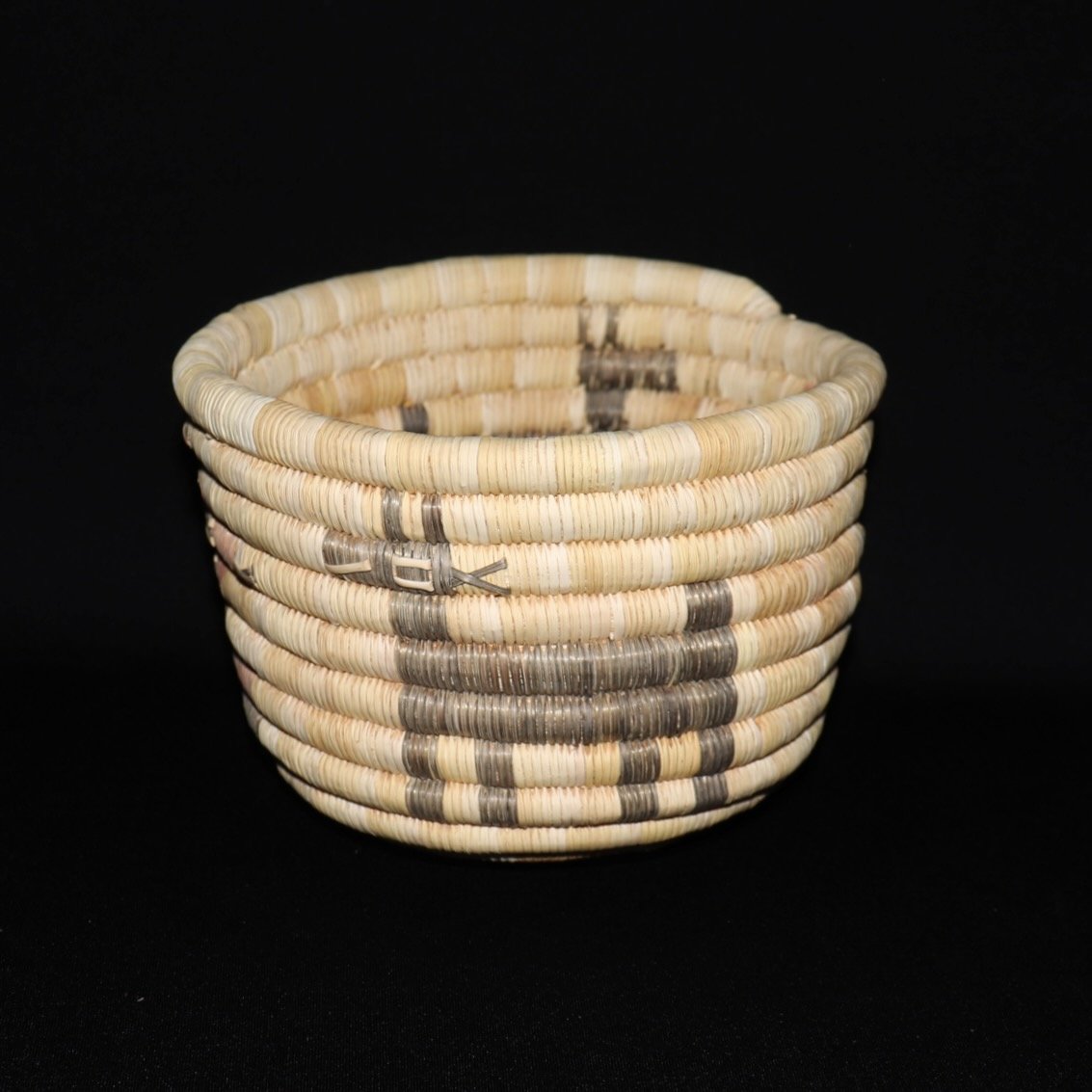
Due to the time and effort involved, as well as the increasing influence of modern life on the traditional Hopi world, fewer and fewer of these baskets are woven each year.
